Turn the comparison into one multiple and a bar chart
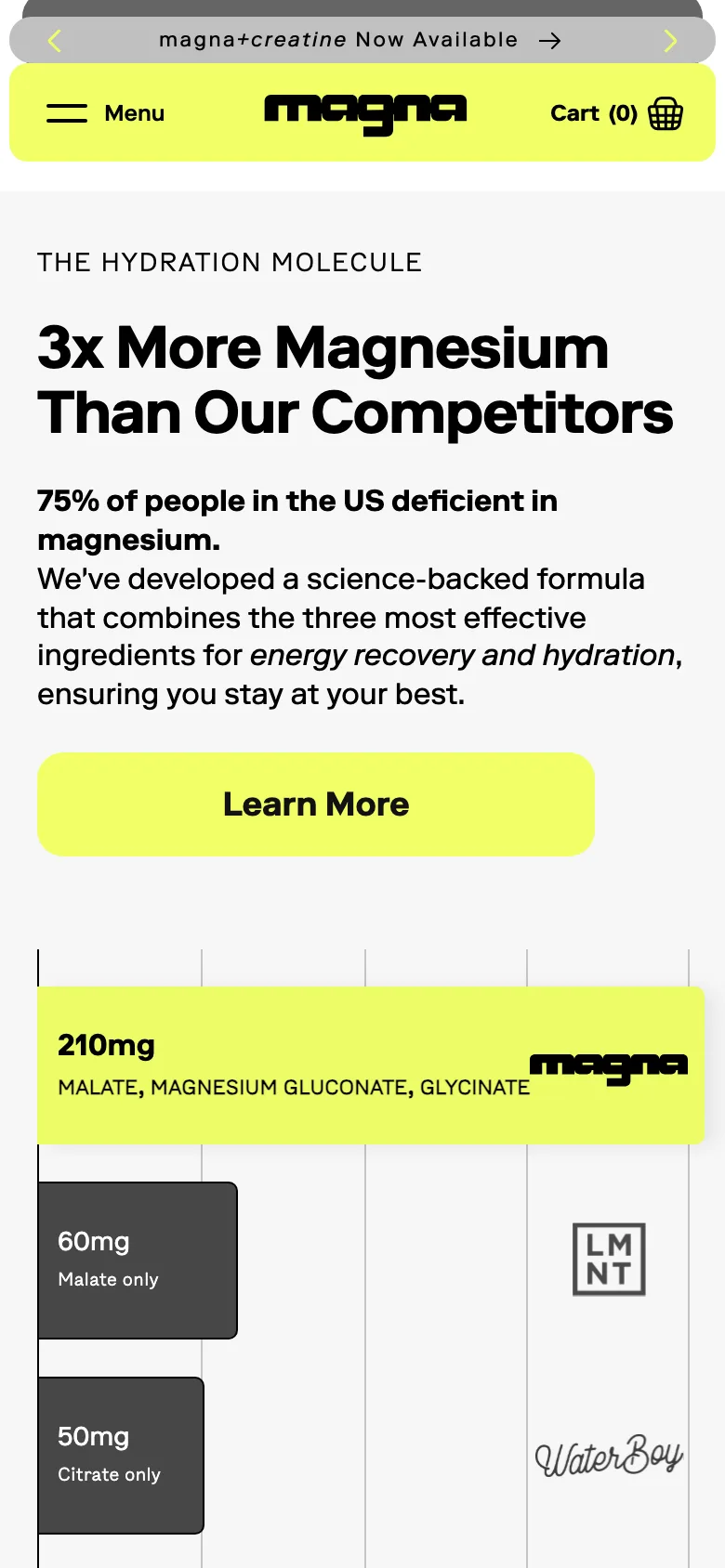
"3x more magnesium than our competitors" is backed by a bar chart of milligrams per named rival, so the headline claim is checkable on the same screen.
What it is
The section leads with a single multiple, "3x More Magnesium Than Our Competitors", a two-line reason it matters, then a bar chart: the brand's 210mg across three magnesium forms against three named competitors at 60mg, 50mg and 26mg, each labelled with the single form it uses.
Why it works
A multiple is memorable in a way a table is not, and the chart directly under it lets the sceptical shopper verify the claim instead of taking it on trust. Naming the competitors raises the stakes, so the numbers have to be current and sourced; the payoff is a comparison the shopper can repeat to someone else.
How to test it
- Hypothesis
- Leading the comparison with a single quantified multiple and a bar chart of named competitors will lift add-to-cart rate versus a checkmark-only comparison grid.
- Primary metric
- Add-to-cart rate (product page sessions)
- Guardrail metric
- Scroll depth past the section, to confirm the chart is read rather than skipped
Related ideas
Want this tested on your store?
We run the experiment, call the result honestly, and get paid on what it adds.
See the performance program